
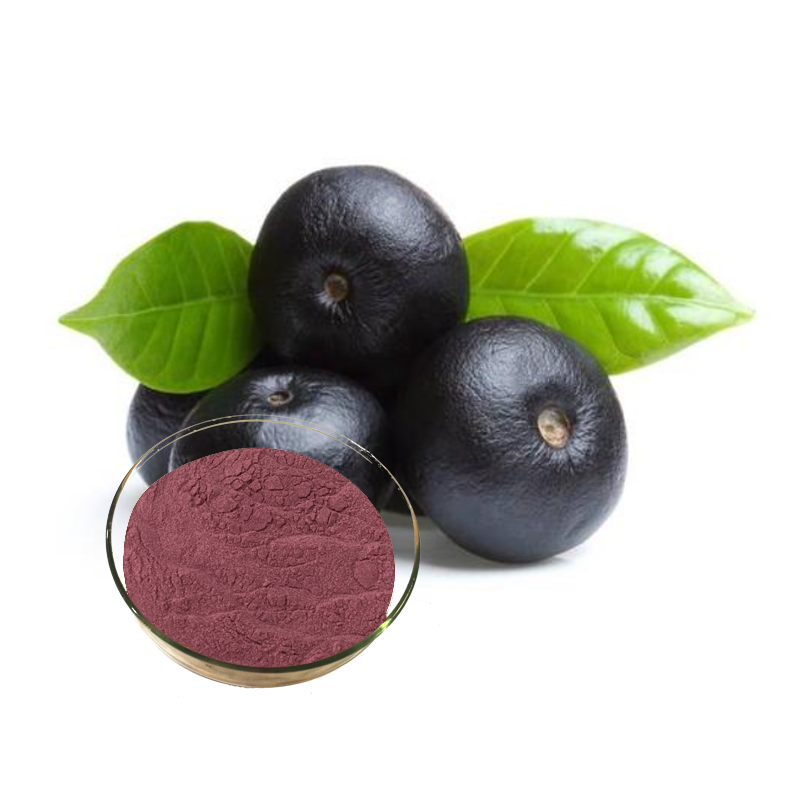
Acai Berry is a nutrient rich berry native to the Amazon region of Central and South America. It has received widespread attention from the international community due to its unique health benefits and nutritional value. The following are the main benefits and functions of Acai berries:

1. Antioxidant effect
Acai berries are rich in anthocyanins and other polyphenolic compounds, such as epicatechin, catechins, isoquercetin, and other compounds, which endow Acai berries with extremely high antioxidant capacity. Research has shown that consuming Acai berries can increase the body’s antioxidant capacity, reduce the production of reactive oxygen species, lower the concentration of serum protein carbonyls, and increase total serum thiol groups, thereby helping to protect cells from oxidative damage.
2. Improve metabolic syndrome
Metabolic syndrome is a group of metabolic disorders, including obesity, hypertension, dyslipidemia, and hyperglycemia. The intake of Acai berries can help reduce fasting blood glucose, insulin levels, postprandial blood glucose rise rate, total cholesterol, and low-density lipoprotein cholesterol, thereby positively improving metabolic syndrome related indicators.
3. Reduce the risk of cardiovascular disease
Cardiovascular disease is one of the leading causes of death worldwide. Acai berries may help reduce the risk of cardiovascular events by improving vascular function. Research has shown that short-term intake of Acai berries can improve vasodilation function, although further long-term studies are needed to confirm this effect.
4. Beneficial non-alcoholic fatty liver disease
Non alcoholic fatty liver disease (NAFLD) is one of the most common liver diseases, closely related to obesity, metabolic/insulin resistance syndrome, and dyslipidemia. Animal studies have shown that the intake of Acai berries may help improve non-alcoholic fatty liver disease, reduce related liver enzyme levels, and increase antioxidant capacity.
Safety precautions
Although Acai berries are a natural food and moderate intake is generally considered safe, in some cases they may interact with medication or be unsuitable for specific populations
Acai berries have a high potassium content and should be avoided by individuals with kidney disease who follow a low potassium diet.
It may have hypoglycemic effect, so diabetes patients should be careful when taking hypoglycemic drugs.
Pregnant or lactating women should avoid using it as its safety is not yet clear.
May interfere with the efficacy of chemotherapy drugs, therefore patients undergoing chemotherapy should avoid using them.
Other potential benefits
In addition to the main benefits mentioned above, Acai berries may also have the following effects:
Protect vascular endothelium and resist arteriosclerosis
anti-cancer effect
Maintain endocrine balance
Relieve constipation and promote bowel movements
Adjust metabolism
Relieve pigmentation
Are Acai berries and blueberries the same
No. Acai Berry and Blueberry, although both belong to the berry fruit category, have significant differences in plant species, growth environment, nutritional composition, and health benefits.
Plant species and growth environment
Acai berry: Acai berry is the fruit of a palm family plant, native to the Amazon rainforest region of Central and South America. It usually grows in tropical and subtropical wetland environments.
Blueberries: Blueberries belong to the Ericaceae family and the Vaccinium genus, mainly distributed in temperate regions of the Northern Hemisphere, especially in North America and Europe. Blueberries can grow in various soil types and have strong adaptability.

Nutritional Information
Acai berry: Acai berry is rich in anthocyanins, polyphenolic compounds, dietary fiber, vitamin C, potassium and other nutrients. Its antioxidant capacity is very high, and it is one of the fruits with the highest content of antioxidant substances.
Blueberries: Blueberries are also rich in anthocyanins, vitamin C, vitamin K, dietary fiber, and manganese. Blueberries also have good antioxidant properties, but compared to Acai berries, their types and contents of antioxidant substances may be slightly different.
health benefits
Acai Berry: The health benefits of Acai Berry include antioxidant, anti-inflammatory, cardiovascular protection, improvement of metabolic syndrome, and reduced risk of non-alcoholic fatty liver disease. It may also help improve cognitive function and enhance the immune system.
Blueberries: The health benefits of blueberries are mainly related to their antioxidant properties, including improving cardiovascular health, supporting brain health, improving vision, anti-inflammatory and anti-cancer effects. Blueberries are also believed to help reduce the risk of certain chronic diseases, such as heart disease and certain types of cancer.
Usage
Acai berry: Due to its difficulty in storage and transportation, common forms on the market include freeze-dried powder, concentrated juice, capsules, and energy drinks.
Blueberries: Blueberries can be consumed directly or processed into ingredients such as fruit sauce, juice, baked goods, and yogurt.
Contact: Serena Zhao
WhatsApp&WeChat :+86-18009288101
E-mail:export3@xarainbow.com
Post time: Mar-02-2026