
Fresh blueberries are seasonal, heavy to ship and sensitive to heat, and the pigments that give them their color fade when a formula is over-processed or stored warm. A powder solves the logistics problem. Whether it solves the formulation problem depends on which powder a developer chooses.
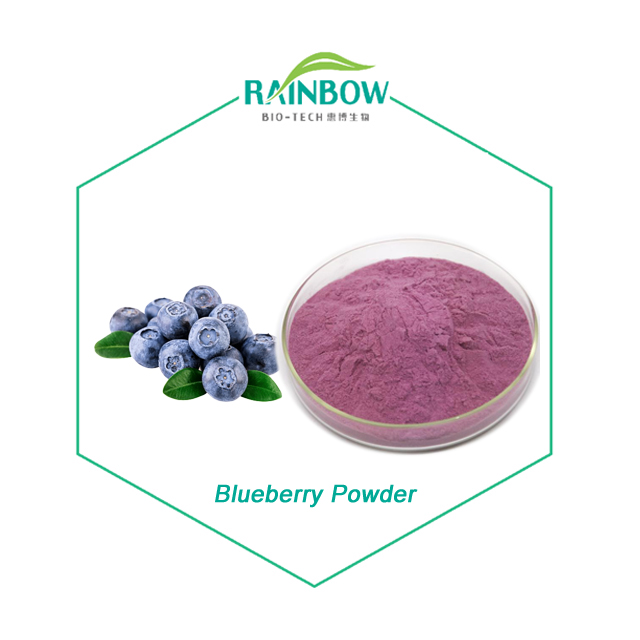
What exactly is blueberry juice powder?
It is not ground dried fruit. Ripe highbush blueberries are pressed, and the juice is separated from skin, pulp and seed. The juice is then concentrated and spray-dried at low temperature onto a small amount of carrier — usually maltodextrin — so the finished material stays free-flowing instead of caking in the bag.
What remains is a fine, deep purple-red powder with the sweet-tart flavor of the juice and a faint floral note. It dissolves in cold or warm water, which is why it suits products that need berry flavor and color without the grit of ground fruit. The carrier share is declared on the specification sheet, so a buyer can see how much of the powder is actual juice solid rather than assume it.
How does it differ from whole-fruit powder, concentrate and extract?
All four carry the word “blueberry,” and they are not interchangeable. The difference is which part of the fruit is kept, and what the ingredient is designed to do.
| Format | What it contains | Strongest use | Trade-off |
| Juice powder (spray-dried) | Juice solids only, on a declared carrier; skin, seed and fiber removed at pressing. | Flavor, color and solubility in one ingredient: instant mixes, dairy, ready-to-drink bases. | No fiber; carrier must be declared; pigment is heat-sensitive. |
| Whole-fruit powder (freeze-dried) | Skin, pulp, seed and fiber, dried whole and milled. | Clean-label texture and fiber in bars, granola, bakery and capsules. | Grittier in drinks; less uniform color; more cost per unit of soluble solids. |
| Juice concentrate (liquid) | Juice with part of the water removed; no carrier. | Plants already set up for liquid handling; economy at volume. | Adds water and sugar to the formula; cold storage and shorter shelf life. |
| Standardized extract | Concentrated anthocyanin fraction, often on a carrier. | A stated pigment dose in supplements and functional blends. | Not a flavor or color ingredient; dose is measured in milligrams, not grams. |
The practical rule: choose a juice powder when flavor, color and solubility have to arrive together; choose a whole-fruit powder when fiber and texture matter more than a smooth mouthfeel; choose an extract when the label needs a pigment number rather than a berry experience. Choosing the wrong format is the most common reason a blueberry concept looks right on paper and fails at pilot scale.
Where does it fit in product development?
Demand concentrates in six areas:
Powdered drink mixes and stick packs. The powder disperses in cold water, so a single-serve sachet can carry real berry flavor and a violet-red tint without a liquid concentrate line.
Ready-to-drink beverages and smoothie bases. Used to build back the color and top notes that dilution and pasteurization flatten.
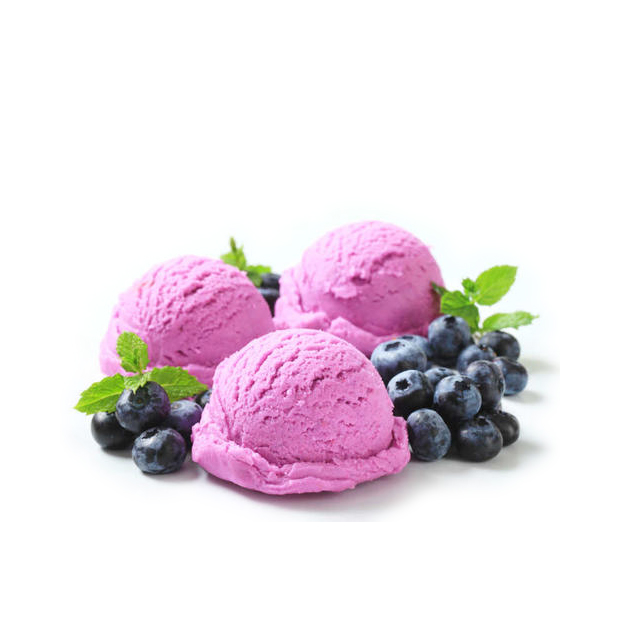
Yogurt, ice cream and plant-based dairy. Provides fruit identity in spoonable and frozen formats, where fruit pieces are expensive or texturally unwanted.
Bakery fillings, glazes and cereal bars. Holds flavor through baking better than fresh fruit and does not add moisture to the crumb.
Supplements and meal replacements. A palatable carrier for antioxidant positioning in gummies, sachets and powdered meal products.
Natural color. A replacement path for brands removing synthetic reds and purples from a label.
Two details decide the final shade. Anthocyanins read brightest in acidic systems, where the powder tints a drink clear violet-red; in near-neutral dairy bases the same powder shifts toward pink-violet and can drift gray, so the shade has to be confirmed in the real base rather than in water. Heat is the second constraint: add the powder late in the process, keep it below the temperatures that dull the pigment, and pack and store the finished product away from light.
What should buyers verify before placing an order?
Start with the specification. A usable sheet states juice-solid or anthocyanin content, carrier type and inclusion rate, moisture, mesh size, solubility, a color reference, microbiological limits, heavy metals and pesticide residues, plus allergen and non-GMO statements. A sheet that says only “100% natural” cannot be used for quality release.
Then check the parts that decide whether the second order matches the first:
Batch COA for the lot you will actually receive, not a representative report from an earlier year.
Certificates held by the production site. For organic, halal or kosher supply, ask for the certificate number and scope rather than accepting a logo on a website.
A production-representative sample. Run it in your own base and check the shade and flavor after your heat process, not in water at room temperature.
A written lot-to-lot range for color and flavor, so a slight seasonal shift in the fruit does not become a rejected batch.
Packaging and storage. Food-grade packaging with a double inner liner, sealed against moisture, and storage that keeps the powder cool, dry and out of light; unopened shelf life is commonly stated at 24 months under those conditions.
Scale terms. Minimum order quantity, lead time, and whether the supplier will reserve your specification for repeat orders.
Contact:Tony Zhao
Mobile:+86-15291846514
WhatsApp:+86-15291846514
E-mail:sales1@xarainbow.com
Post time: Nov-06-2026