
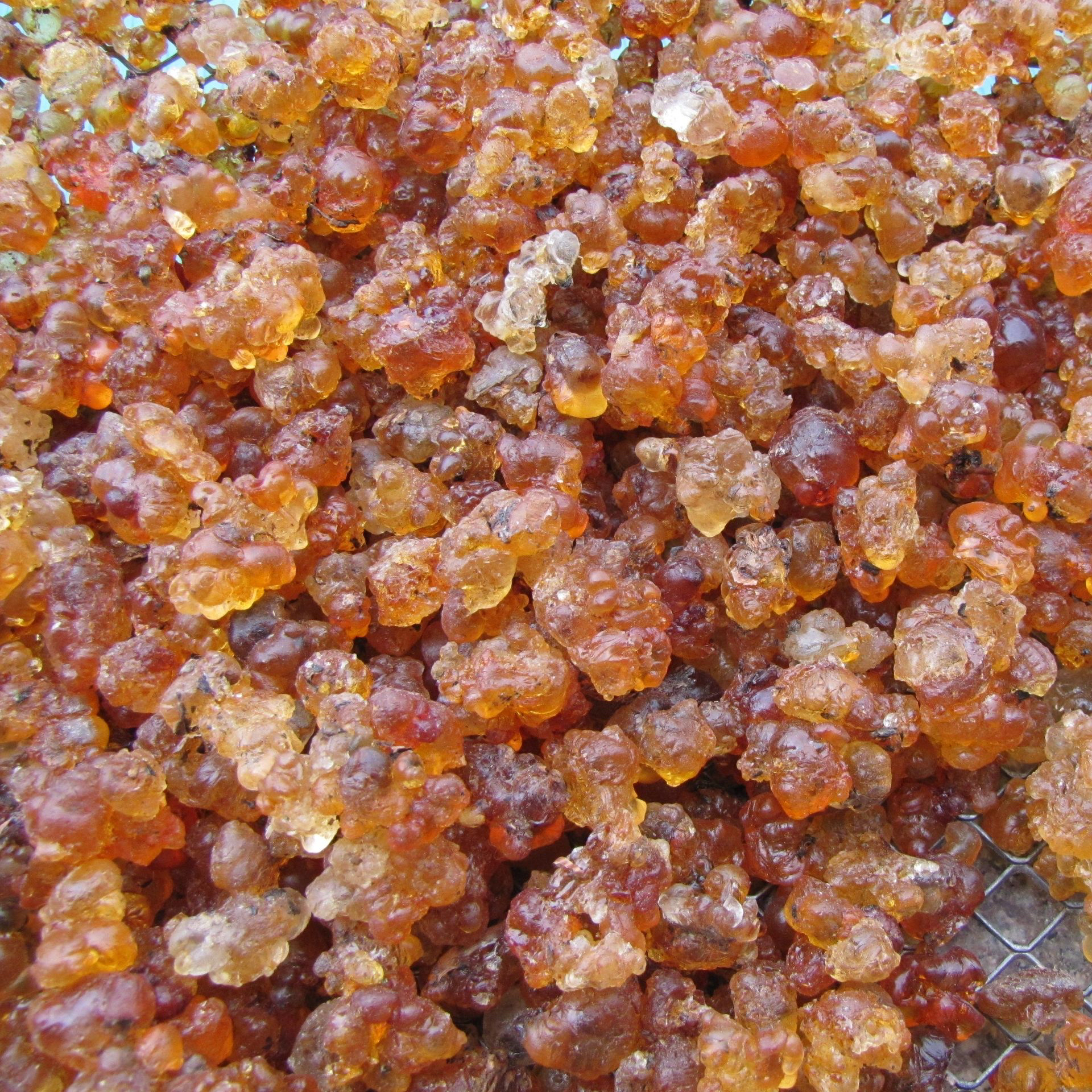
Peach gum is a natural resinous substance secreted from the bark of peach trees (and some other stone fruit trees like apricot or cherry), usually in response to injury or fungal infection. It is also known as “peach resin,” “peach sap,” or “peach blossom tears” in some cultures.
 Characteristics:
Appearance: Amber-colored, translucent, and gelatinous when dried. When soaked and cooked, it becomes soft and jelly-like.
Taste: It is relatively bland on its own but easily absorbs the flavors of soups or desserts it is cooked with.
Texture:Similar to soft gelatin or bird’s nest (a prized ingredient in traditional Chinese cuisine).
Culinary Use:
In Chinese cuisine, peach gum is highly valued as a dessert ingredient. It is often simmered with rock sugar, snow fungus, red dates, goji berries, or fresh fruits to make a sweet soup or tong sui.
It is appreciated for its gel-like texture and is considered a vegan alternative to gelatin or bird’s nest.
It must be soaked (to soften and remove impurities) and then cooked before consumption.
 Nutritional and Traditional Benefits:
While scientific research is limited, peach gum is traditionally believed in Chinese medicine to have benefits such as:
1.Promoting skin health and hydration (due to its high soluble fiber content).
2.Supporting digestion.
3.Providing dietary fiber and polysaccharides.
4.It is low in calories and contains primarily carbohydrates (dietary fiber), with minimal protein and fat.
Important Notes:
Not the same as peach sap or tree gum in other contexts – In Western contexts, tree gums (like cherry gum) were historically used as adhesives or chewing gum, but peach gum in Asian cuisine is specifically the edible, cleaned resin.
Allergy caution – Those with stone fruit allergies should avoid it.
Source – It is harvested from peach orchards, often as a byproduct, and cleaned thoroughly before sale.
How is peach gum usually used in cooking?
Peach gum is most commonly used in sweet dishes for its chewy, jelly – like texture after proper soaking and cooking, and it can also be added to savory dishes and beverages. Here’s a detailed breakdown of its cooking applications and key steps:
Core Prep Steps (Non – negotiable)
1.Soaking: Soak dried peach gum in cold water for 10–12 hours (or overnight) to fully rehydrate and expand. In hot weather, soak it in the fridge to prevent spoilage.
2.Cleaning: After soaking, pick out bark chips, black impurities, and debris, then rinse thoroughly. Tear large pieces into smaller chunks for even cooking.
3.Cooking: Simmer over low heat for 30–60 minutes until soft and translucent. Avoid high heat to prevent over – boiling, which can ruin the texture.
Common Cooking Uses & Recipes:
1. Sweet Dessert Soups (Most Popular)
Sweet soups (tang shui) are the classic way to use peach gum. It pairs well with ingredients like white fungus, saponin rice, snow lotus seeds, red dates, longan, pears, and rock sugar.
Peach Gum & White Fungus Soup: Soak peach gum (30g), white fungus (100g), and saponin rice (30g) overnight. Simmer the fungus, red dates, and longan for 90 minutes, then add peach gum, saponin rice, and rock sugar, and simmer for 5–10 minutes more. Serve hot or cold.
Peach Gum & Pear Stew: Combine soaked peach gum, peeled and cored pear chunks, and rock sugar. Simmer for 40 minutes for a hydrating dessert, ideal for dry seasons.
2. Milk – Based Treats
Peach gum adds a unique chewy texture to milk – based drinks and desserts.

Peach Gum Milk Tea: Cook soaked peach gum with rock sugar for 30 minutes. Brew black tea, mix with milk and sugar, then add the cooked peach gum. Serve iced or warm.
Peach Gum Stewed Milk: Simmer soaked peach gum and red dates for 30 minutes. Add milk and wolfberries, then simmer over low heat for 5 minutes (do not boil the milk). Add rock sugar to taste.
3. Savory Dishes (Regional Specialties)
It can be used to thicken sauces and add texture to meat dishes.
Braised Pork Belly with Peach Gum: Brown the pork belly first, then braise with seasonings (soy sauce, rice wine, rock sugar) for 30 minutes. Add soaked peach gum, stir well, and simmer for 15 minutes to let the gum absorb the sauce and soften.
Stir – Fried Tofu with Peach Gum: Sauté tofu until golden, then add cooked peach gum, salted vegetables, and a light sauce. Stir – fry quickly to coat evenly.
4. Other Creative Uses
Fruit Salad Topping: Mix cooked peach gum with coconut milk/yogurt, diced mango/strawberry, and sago for a refreshing fruit dessert.
Congee Addition: Add soaked peach gum, lotus seeds, and lily bulbs to cooked rice porridge, and simmer for 20 minutes for a nourishing breakfast congee.
Key Tips
Flavor Matching: Peach gum itself is tasteless, so pair it with sweeteners (rock sugar, honey) or flavorful ingredients (dates, longan, tea) to enhance taste.
Texture Control: Simmer for a shorter time for a chewier texture, and longer for a softer, more jelly – like consistency.
Storage: Cooked peach gum can be stored in an airtight container in the fridge for 3–5 days.
If you are interested in our product or need samples to try, please do not hesitate to contact me at any time.
Email:sales2@xarainbow.com
Mobile:0086 157 6920 4175(WhatsApp)
Fax:0086-29-8111 6693
Post time: Dec-31-2025