
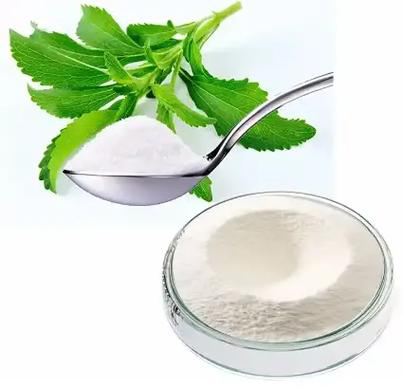
Steviol Glycosides, commonly known as Stevia extract, is a natural plant-based sweetener obtained from the dried leaves of Stevia rebaudiana, a native plant of the Asteraceae family in South America, through water extraction, filtration, resin purification, concentration and spray drying。
I. Differences in active Ingredients and Sweetness
Stevia is not a single compound but a mixture of more than ten steviosides. The sweetness and taste of different components vary greatly。
1. Rebaudioside A (Reb A, rebaudioside A)
Sweetness: 350 to 450 times that of sucrose. It is the most core component for commercial use, with the mildest aftertaste and a flavor closest to white granulated sugar. It is the first choice for high-end beverages and functional foods.
2.Stevioside (STV, stevioside)
Sweetness: 250 to 300 times that of sucrose, with a distinct licorice aftertaste, lower cost, and mostly used in condiments, feed, and low-end food.
3.Reb C / Reb D / Reb M
Reb M has the best taste and almost no aftertaste. It belongs to the new generation of high-value components and is expensive. It is mostly used in high-end sugar-free foods.
Ii. Core Physical and Chemical Properties
Sweetness: 200-450 times that of sucrose ,, RA97 can reach 350-450 times
Calories: Almost 0 calories , the human body hardly metabolizes or absorbs them
Stability: Resistant to high temperatures (≤200℃), acid and alkali, and will not decompose during baking or beverage sterilization.
Disadvantages: There is a slight aftertaste of licorice at high concentrations, while the bitterness is very low at high RA specifications
Solubility: Readily soluble in hot water, with average solubility in cold water. The solubility of high-purity RA is slightly inferior
Iii. Mainstream Industrial Specifications
1:SG90 (total glycosides ≥90%, RA 40-60%) : Cost-effective basic product, suitable for condiments and feed
SG95 RA60 (Total glycosides ≥95%, RA≥60%) : Universal for food, suitable for tea beverages and jams
3. SG95 RA80 (Total glycosides ≥95%, RA≥80%) : A bestseller in the international market, sugar-free beverage and health product
4. RA97 (Reb A≥97%) : High-end specification, table sugar substitute, high-end functional beverage
5. Reb M Series: Ultra-high taste, high-end sugar-free food, with a relatively high price
Iv. Application Scenarios
Food and beverages: sugar-free soda, bottled tea drinks, yogurt, candies, chocolates, baked goods, preserved fruits, sauces
Dietary health products: tablets, powders, oral liquids, to mask the bitterness of raw materials
daily chemical oral care: toothpaste, mouthwash, non-acidic, preventing tooth decay
Feed industry: Low-purity stevia improves the palatability of feed
V. Safety and Export Compliance
JECFA (FAO/WHO Committee on Food Additives) ADI value: 0-4mg/kg body weight (steviol equivalent);
Compliance certifications: FCC (Codex Alimentarius Commission for Food Chemicals), EU standards, Kosher certification, Halal certification, GRAS (American Safety Certification)
According to the Chinese national standard GB1886.355-2022, it is allowed to be added to domestic food.
Six. Simple Comparison with Other sugar substitutes
Compared with sucrose: 0 calories, high sweetness, and very little addition. The disadvantage is that it has an aftertaste at high concentrations。
Compared with erythritol: Stevia has a higher sweetness and requires less addition. Erythritol tastes more like white sugar, but its sweetness is only 70% of that of sucrose
Compared with chemical sweeteners (aspartame) : Plant-based natural properties, heat-resistant, and free from the risk of aspartame decomposition at high temperatures
Overall, stevia is a good sugar substitute for blood sugar control and is suitable for people who need to control their sugar intake. By paying attention to the dosage, you can better enjoy the sweetness.
Contact:Judy Guo
WhatsApp/we chat :+86-18292852819
E-mail:sales3@xarainbow.com
Post time: Sep-24-2026