
I. Basic Information
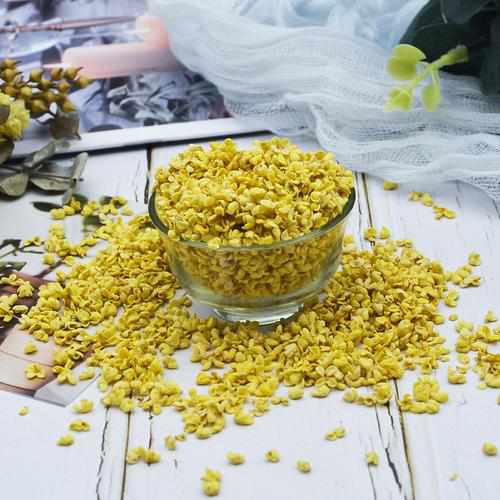
(1)Origin of raw materials
Main production areas: Guilin, Guangxi; Xianning, Hubei; Hangzhou, Zhejiang; Suzhou, Jiangsu; The picking period is from September to October. Special osmanthus flowers for edible bases are selected to avoid the risks of heavy metals and pesticide residues in roadside landscape osmanthus.
(2)external properties
Virgin crushed powder: light yellow – light orange-yellow fine powder, 80-200 mesh; The aroma is sweet and fresh, with a strong characteristic of osmanthus. Cold water is insoluble, suspended and turbid, with a small amount of petal fiber sediment.
Extract spray-dried powder: light yellow powder, fully water-soluble, with a relatively concentrated aroma and good fluidity, suitable for beverage formulas.
Scent: Pure and sweet osmanthus fragrance; Products with a burnt, sour or pungent smell of essence are of inferior quality.
Moisture content: The moisture content of high-quality products is ≤6.5%, preventing caking and mold
Two. Three major production processes
(1)Hot air drying and crushing (Standard version)
Dried osmanthus → Drying → Crushing, sieving and sterilization; Low cost; The disadvantage is that a large amount of aromatic substances are lost at high temperatures, resulting in a relatively weak aroma. It is mostly used in baking and fillings.
(2)Freeze-dried osmanthus ultrafine powder (High-End)
Frozen vacuum drying of fresh flowers → low-temperature ultrafine grinding Retain the aroma substances such as β -violet ketone and linalool to the greatest extent; Rich aroma; The mesh count can reach 200-500 mesh. The price is on the high side
(3)Osmanthus flower Extract Spray Drying Powder (Instant Dissolving Type)
Water extraction/alcohol extraction osmanthus filtrate → concentration → spray drying; Can be dissolved in cold water; Suitable for solid beverages and liquid drinks; Some products will add maltodextrin carriers.
Iii. Main Active Ingredients
Volatile aromatic substances: β -violet ketone, linalool, nerol, nonal (source of osmanthus fragrance)
Flavonoid polyphenols: quercetin, kaempferol derivatives, antioxidant components
Phenylethanol glycosides (such as woolen glycosides), various amino acids, and trace minerals
Iv. Industry Application Fields
Food industry
Baking (mooncakes, pastries, biscuits), candies, lotus root starch, solid beverages, flower and plant powder, fillings, rice wine, fruit tea, ice cream, condiment flavoring.
Tea beverages and pre-mixed drinks
Flower tea bags, bottled beverages, syrup raw materials; The extracted powder is more suitable for liquid systems.
Raw materials for daily chemical fragrances
Facial masks, scented ointments and hair care products are used as natural aromatic raw materials
Vii. Key Points for Quality Identification
If the color is overly bright golden yellow, be cautious of sulfur fumigation. Blackening, lumps and mold spots = deterioration.
Raw powder brewing: The water is light yellow with sediment of petal fibers. Completely clear and bright is most likely a flavor-mixed powder.
Must-see tests: sulfur dioxide residue, heavy metals lead, arsenic and cadmium, pesticide residues, microorganisms.
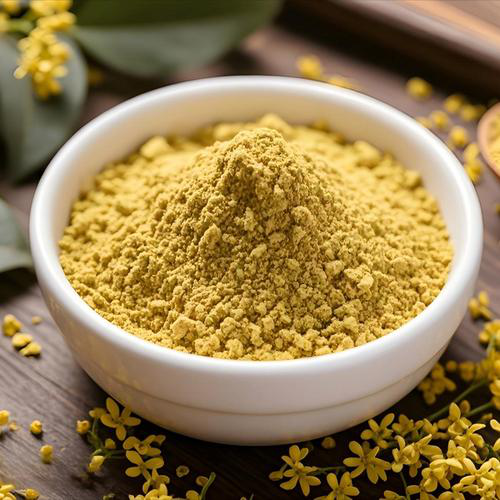
Osmanthus powder is processed from edible osmanthus flowers and is divided into two types: virgin crushed powder and water-soluble extracted powder. It has a naturally sweet and rich osmanthus honey fragrance and is rich in natural volatile oil and polyphenols. Widely used in baking, solid beverages, tea drinks, and daily chemical fragrances; When purchasing, it is necessary to distinguish the processes, attach importance to the traceability of raw materials and sulfur dioxide detection, store them in a sealed and light-proof container to reduce aroma loss, and only use them as food flavor ingredients。
Contact:Judy Guo
WhatsApp/we chat :+86-18292852819
E-mail:sales3@xarainbow.com
Post time: Aug-17-2026